


The Cost of Waiting
Imagine you sold your business and retired. You built a $10 million business over three decades. It was your life's work—until it becomes your biggest regret.
You sold in a hurry after burnout crept in. No clean books. No tax planning. No clarity on what you really wanted. The buyer saw that, too. They lowballed the offer, pointed out every flaw, and dictated terms. One year later it hits you, you would give back half the money to redo the process.
Sadly, this is the reality for most.
According to the Exit Planning Institute, “75% of owners who sell their business profoundly regret it within a year.”
Why? Because they waited too long to plan.
“Selling your business isn’t just about ‘when you’re ready.’ It’s about when your business—and your life—are positioned to make that transition a success.”
That window starts at least 3–5 years before the sale.
Here’s why that time frame matters—and what to do about it.
Why Is Waiting to Plan Your Business Exit So Risky?
Let’s talk about what happens when you delay exit planning—because it’s not just about missing a deadline. It’s about slowly eroding value while you're too busy to notice.
- Burnout leads to bad decisions. Exhaustion makes you reactive, not strategic. Buyers can feel it.
- You miss key tax strategies. We’ve seen owners overpay by 6–7 figures just because they didn’t do proactive tax planning.
- Your books aren’t ready. Unreconciled statements, customer concentration, outdated systems—it all shows up in due diligence.
- No buyer prep = low valuation. If your business only works with you in the building, it’s not sellable. It’s a job.
- The wrong team = deal stress. Trying to find the right attorney or M&A advisor once an offer hits the table? That’s a panic move.
Selling well takes time. Which brings us to the 5-Year Rule.
What Should Business Owners Do 5 Years Before Selling?
Here’s a simplified timeline of what smart business owners do:
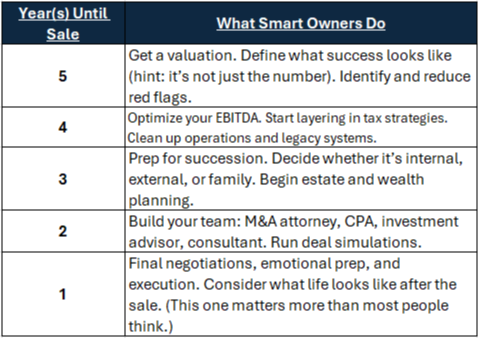
Each year is a lever. Use it, and you gain control. Skip it, and the market tells you what your exit will look like.
How Do You Start Planning a Business Exit?
You don’t have to figure this all out in a week—but you do have to start.
That’s why we created a simple tool: The 10-Step Exit Readiness Checklist + Scorecard. It helps you:
- Assess where you really stand (not just where you hope you are)
- Spot the gaps that could cost you millions
- Prioritize the actions that create the most value—financially and emotionally
It’s not overwhelming. It’s just honest.
And it’s how you shift from waiting to preparing.
Ready to Own Your Exit?
[Download the Exit Readiness Checklist + Scorecard here]
It’s free, simple, and might just save you years of regret.
[Book a Strategy Call]
We’ll walk through your scorecard together and map out what your 5-year plan could look like.
Because a good exit doesn’t start at the closing table.
It starts when you decide to lead it—just like you’ve led everything else.
If you would like to discuss your current situation schedule a free 20-minute call with the link below.
 | About the Author |
Sources:
1. https://exit-planning-institute.org/state-of-owner-readiness