


The Wrong Trustee Can Derail Your Legacy. The Right One Can Preserve It.
Selecting a trustee isn’t just a legal formality—it’s a legacy-defining decision.
At FSC Wealth Advisors, we’ve worked with grandparents, parents, and business owners navigating this process, and we’ve seen what it looks like when you choose the right trustee. We have also seen the stark difference when you choose the wrong one. One family’s trust provided stability, clarity, and harmony for years. Another's turned into conflict, confusion, and—sadly—court battles.
Why? Because choosing a trustee isn’t just about finances. It’s about who you trust to carry your values forward when you’re no longer there to explain them yourself.
This guide will walk you through the key duties of a trustee, essential traits to look for, pros and cons of different trustee types, common mistakes, smart interview questions, and the next steps to protect your estate plan.
What Are the Duties of a Trustee?
A trustee is responsible for managing trust assets in line with the trust document and fiduciary law. Duties include asset distribution, investment oversight, tax filing, and clear communication with beneficiaries.
Let’s start with the basics.
When you create a trust, your trustee is responsible for trust administration. That means managing the assets in the trust according to your instructions.
Core trustee responsibilities include:
- Distributing assets according to your trust instrument and fiduciary duties
- Managing investments under the prudent-investor standard
- Filing taxes and understanding estate and generation-skipping tax implications
- Communicating with beneficiaries and resolving disputes
- Keeping excellent records and documentation
- Coordinating with your estate attorney, CPA, and financial advisor
At the end of the day, your trustee is the person making sure your legacy lives on the way you intended...
What Traits Should a Trustee Have?
When choosing a trustee, it’s not just about who’s willing- it’s about who’s truly capable. You need someone who gets it, wants it, and has the capacity to do it.
Here are five must-have attributes:
1. Integrity and Impartiality
Can they treat all beneficiaries fairly—even in blended family dynamics or emotional situations?
2. Financial Acumen and Tax Knowledge
Do they understand investment principles, tax planning, and fiduciary liability? Can they navigate estate tax and distribution standards like HEMS (health, education, maintenance, support)?
3. Administrative Capabilities
Trustees must stay organized, meet deadlines, and manage ongoing tasks like recordkeeping, compliance, and documentation.
4. Time Commitment and Continuity
Serving as a trustee isn’t a one-time job. It may last decades. Will the trustee you choose have the capacity—and longevity?
5. Communication and Conflict Resolution
They need to be able to explain complex topics to beneficiaries, document decisions, and reduce tension—not add to it.
Should I Choose a Family or Professional Trustee?
There’s no one-size-fits-all answer. The right trustee for your family depends on your priorities—and your people.
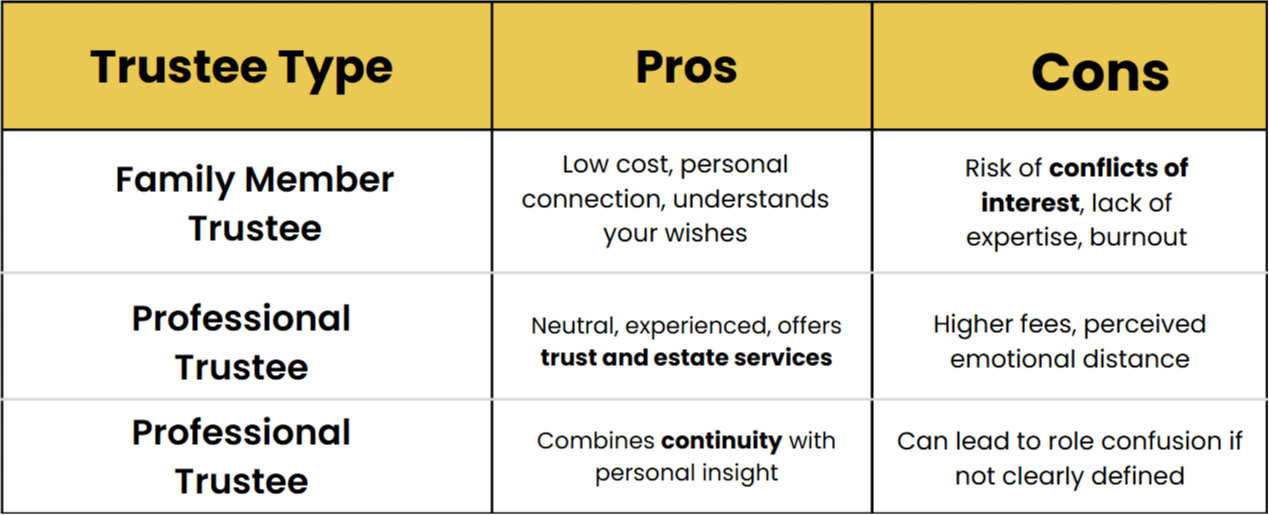
You can also designate a successor trustee in your estate plan, ensuring continuity if your primary trustee can’t serve due to incapacitation or death.
What Mistakes Should I Avoid When Choosing a Trustee?
Even smart families make these avoidable errors:
- Choosing a trustee just because they’re family
- Failing to name a backup trustee
- Ignoring how complex assets (like a business or real estate) may require professional trustee expertise
- Overlooking the need to clearly define roles between the trustee, executor, and power of attorney
- Forgetting to review the plan every 3–5 years or after major life events
Trustees don’t just need your trust. They need clarity and support.
What Questions Should I Ask When Choosing a Trustee?
If you're interviewing potential trustees—whether a family member, attorney, or corporate trustee ask:
- Will they act in the beneficiaries’ best interest?
- Do they understand fiduciary duties and trustee liability?
- Can they handle tax filings and distributions objectively?
- Are they financially stable and responsible themselves?
- Can they collaborate with your attorney, CPA, and wealth advisor?
- Are they organized and disciplined with documentation?
- Can they resolve conflict without taking sides?
- Will they likely still be around in 20 years?
- Do they understand—and respect—your values?
- Are they willing to say no when needed, even under pressure?
Communicate Your Choice—Clearly and Kindly
Don’t let your trustee appointment be a mystery.
Write a legacy letter explaining your reasoning. Hold a family meeting or advisor-led conversation. Emphasize that this isn’t about who you trust most. It’s about who’s best equipped to carry out your wishes without conflict or confusion.
Trustee selection is about preserving harmony, not just wealth.
How Do I Finalize My Trustee Decision?
If you’re reviewing your estate planning documents or creating a trust for the first time; here’s your checklist:
✔️ Review your current trustee appointments
✔️ Evaluate options using the criteria above
✔️ Talk with your estate attorney and wealth advisor
✔️ Define distribution standards and communicate them
✔️ Revisit every 3–5 years or after major life changes
Your Trustee Is a Steward of Your Legacy
Choosing a trustee isn’t just about naming a person. It’s about choosing a steward—someone who understands your values, navigates family dynamics with care, and carries out your vision for generations.
Whether you name a family member, a professional trustee, or a co-trustee, take your time. Ask the hard questions. Get expert guidance.
Because when it comes to your legacy, shortcuts cost more than money.
If you would like to discuss your current situation schedule a free 20-minute call with the link below.
 | About the Author |